

Vladimir Putin Network
Russia may soon prohibit the use of VPNs



Here’s what you might have missed this week:
Russian authorities may soon prohibit the use of virtual private networks (VPNs) in addition to ramping up other internet restrictions.
The governor of Novosibirsk dismissed the region’s Minister of Agriculture in response to recent protests.
Steelmaker Severstal reported extremely low profits for the first quarter of 2026 compared to previous years, signaling problems for the industry.
— Sara Ashbaugh
Online and offline pressure
The Kremlin’s crackdown on providers that help Russians bypass internet restrictions is continuing at full pace. Authorities are preparing to prohibit hosting providers from offering server capacities to VPN services. There are also plans to block payments for VPN services when using Russian bank cards. Additionally, the authorities are using communication and intimidation tactics to discourage VPN use. Russian schools have initiated mandatory lessons for students regarding the “harm” of VPN services. Last week, a court issued the first sentences in which the use of a VPN was officially cited as an “aggravating circumstance” in a criminal case. Under new legal formulations, border guards now have the authority to inspect phones and other electronic devices, and refusing to grant them access can result in 15 days of detention. The authorities have also continued their controversial attempts to fully block access to the Telegram messaging and information sharing app. However, last week, Telegram reportedly enabled a feature allowing premium (paid) users in Russia to bypass the blocks using traffic masking. As of the latest reports, this bypass feature was functioning without a proxy or VPN on Android, but not on desktop or iPhones.
Along with the acceleration of internet restrictions, the Kremlin has also reportedly communicated to all of the so-called “systemic opposition” parties that any criticism of the restrictions must be coordinated with the Presidential Administration and told them not to mention specific government officials or agencies in their rhetoric. This suggests growing unease over the political ruptures that the internet restrictions seem to have exposed or widened over the past weeks. For example, pollsters measured a visible drop in Putin’s approval ratings after the newest internet restrictions, and the popularity of the “New People” party started to increase. Last week, influencer Viktoria Bonya posted a video that went viral in which she criticized the restrictions, along with several other recent issues that triggered localized protests. The video also caused verbal clashes between Bonya and Kremlin propagandists and politicians, even though Bonya hastily signaled that she was not criticizing the Kremlin. Representatives of the Russian IT industry have stated that the industry has lost “investment certainty” at a time when the government is expecting to build digital sovereignty. IT workers talking to Meduza also pointed out that RKN, Russia’s communications watchdog, has become gradually more competent at monitoring and blocking traffic over the years, which has made standard IT work very difficult.
Commenting on the restrictions this week at a meeting with the federal government, President Putin held the authorities’ line, stressing that the restrictions are important to “prevent terrorist attacks” but noting that they should be better communicated to citizens. The president thus devolved political responsibility to lower-level authorities—a central feature of Russia’s federal crisis-management system. He also signaled that the policy itself is non-negotiable, at least from the part of the general public, and that the Kremlin either does not see or does not fear the elevated political risks associated with it.
The authorities’ moves underline the ongoing creation of an “information aristocracy,” which has been in development for several years. They are gradually establishing stricter control over online communications and restricting access to data produced or collected by government entities, spearheaded by the security services. Over the past months, however, major and unusually public disputes have emerged, with several public officials and members of the business elite pushing back against further restrictions that could disrupt their own operations.
— Andras Toth-Czifra
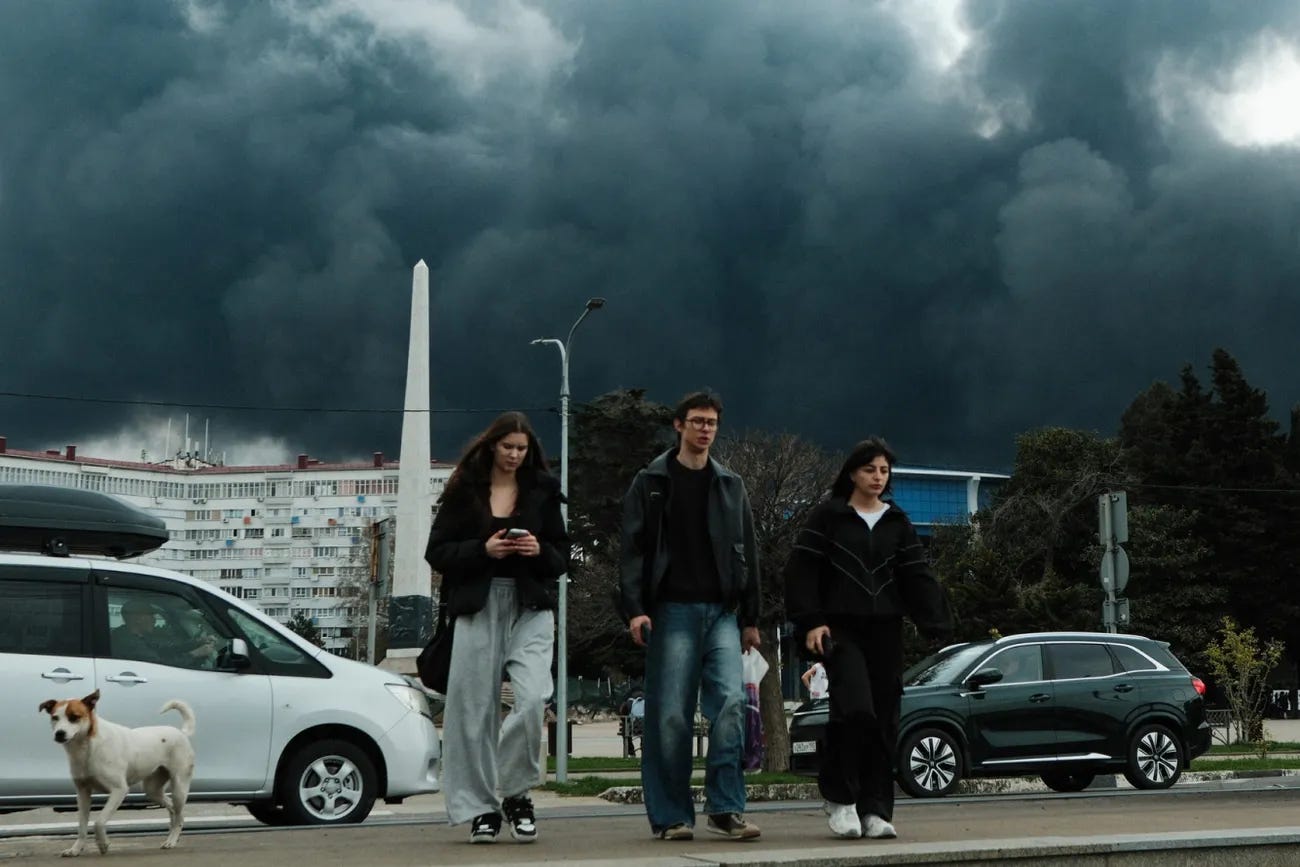
A Ukrainian drone strike on an oil refinery near the city of Tuapse started a massive fire on Monday. The attack hit the Tuapse Oil Refinery located on the coast of the Black Sea, setting the refinery ablaze and spilling petroleum products into the Black Sea and the Tuapse River. The city of Tuapse was blanketed in smoke, and since then residents have complained of poor air quality and polluted black rain. The fire burned for nearly five days; Krasnodar Governor Veniamin Kondratyev announced that it had been fully extinguished on April 24. (photo: Boris Morozov / RIA Novosti / Sputnik / Profimedia)
Quickfire: Regions
Novosibirsk Governor Andrey Travnikov dismissed the region’s Minister of Agriculture, Andrey Shindelov, this week. The dismissal was ultimately a consequence of last month’s unrest in the region. Residents protested the mass culling of livestock after an outbreak of pasteurellosis (according to the authorities), which many suspected was actually foot-and-mouth disease. During the protests, Shindelov was filmed literally running away from a local resident, Svetlana Panina, who wanted to question him about the culling of her livestock. It is likely that it was this public ridicule, and not the wider failures of Shindelov’s Ministry in handling the outbreak, that led to his dismissal. Given that there are growing problems with the region’s fiscal stability, public services (e.g. waste collection), and a series of corruption cases, it is unclear whether the dismissal of one minister will be considered satisfactory by the Kremlin as a stabilizing factor. Travnikov otherwise will not face an election before September 2027.
Severstal, Russia’s biggest steelmaker, reported a catastrophic decline in its financial performance for the first quarter of 2026, with net profit falling 370 times compared to the same period in 2025. The company’s profit in this period plummeted from over 21 billion rubles to just 57 million rubles. Management attributed the lower profits to declining global steel prices, the unviability of exports, and the collapse of domestic demand due to falling construction inside Russia. The company is suspending dividend payments. Severstal’s troubles will likely lead to the further deterioration of the fiscal position of the Vologda Region, which is where the company is based and where it is the biggest taxpayer. The region already faced an almost 19% drop in corporate income tax receipts in 2025, which seems to have worsened in 2026 based on the data available about the first two months of the year. Vologda Governor Georgy Filimonov was engaged in a feud with the company, having accused its owner, Alexey Mordashov, of trying to undermine him. However, if Severstal’s troubles are as large as the company’s report makes them seem, this spells problems for other regions that depend on metallurgy too.
— Andras Toth-Czifra
Russia’s Drone Line Experiment
By Rob Lee and Dmytro Putiata
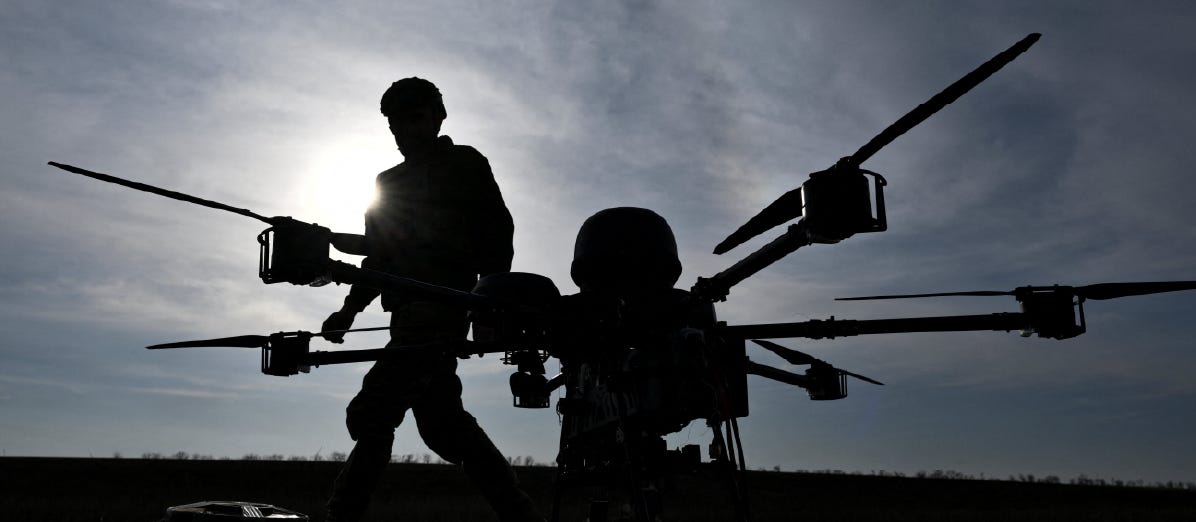
The Russian military has continued to experiment with improving its employment of uncrewed aerial systems (UAS) in support of its maneuver forces.
Both Russian and Ukrainian forces face coordination challenges and internal debates regarding the “ownership” of different depths of the battlespace and the command-and-control relationship between independent drone units and ground commanders.
While Ukraine typically leads in initial technological innovation, Russia has proven effective at copying these advancements and scaling them through systemic experiments across various military districts.
Despite narrowing the capability gap in 2025 through new employment concepts and elite units, Russian advancements have failed to produce a decisive military breakthrough.
For more from Rob and Dmytro, subscribe to Two Marines, a newsletter on Russia’s war in Ukraine, defense technology, and modern warfare.
By the numbers
5 - the number of oil production and transportation sites that reportedly had to pause their operations due to Ukrainian drone strikes over the past week in the Samara Region and the Krasnodar Territory. While it is unclear whether most of these strikes have caused major disruptions, a double strike on the Tuapse Oil Refinery on Russia’s Black Sea coast caused fires in the port infrastructure and oil reservoirs, with smoke reaching hundreds of kilometers and residents experiencing toxic black rain.
10 million rubles - the maximum possible amount of debt relief offered to new military recruits who sign a contract starting May 1, 2026 in a bill introduced to the State Duma over the past week. A similar bill has been in force already, but it only covers debtors who accumulated debt before December 1, 2024. The current initiative underlines that recruitment using direct financial incentives, mostly from regional budgets, has become more difficult over the past months. The authorities are keen to access further, thus far unwilling, pockets of the population.
8.2 trillion rubles - The amount of overdue corporate debt as of late January 2026—a 21% growth over 2025 in nominal terms. The largest parts of this debt are concentrated in manufacturing (2.9 trillion rubles) and trade (1.9 trillion rubles). According to a report reviewed by Forbes, the number of companies with tax arrears grew by 12% in the first quarter of 2026, further signaling a negative trend and a growing liquidity squeeze in the real economy.
50 bps - the amount by which the Central Bank of Russia (CBR) cut the key interest rate at their Board of Directors meeting on Friday. This is the Bank’s eighth consecutive key rate cut, bringing the rate down to 14.5%. According to the CBR’s press release, annual inflation was at 5.7% as of April 20, 2026. However, “proinflationary risks still prevail over disinflationary ones on the mid-term horizon,” the Bank warned, including “a deterioration in the global economic outlook and rising global price pressures amid increased geopolitical tensions.” The energy crisis caused by the war in Iran has created uncertainty in global markets. Nevertheless, the Bank is expected to continue to cut the key rate as inflation nears its 4% target. The next key rate meeting is scheduled for June 19.
150 million - the number of barrels of oil that Russia has agreed to sell to Indonesia after Indonesian President Prabowo Subianto’s visit to Moscow last week. The Indonesian Special Envoy for Energy and Environment, Hashim Djojohadikusumo, announced the deal on Thursday, celebrating its potential to “address economic volatility issues.” Usually, Indonesia receives up to a quarter of its crude oil imports from the Middle East, but these shipments have been disrupted due to the closure of the Strait of Hormuz. Russia has agreed to provide Indonesia with 100 million barrels at a special price, with 50 million more to follow if necessary.
— Andras Toth-Czifra & Sara Ashbaugh